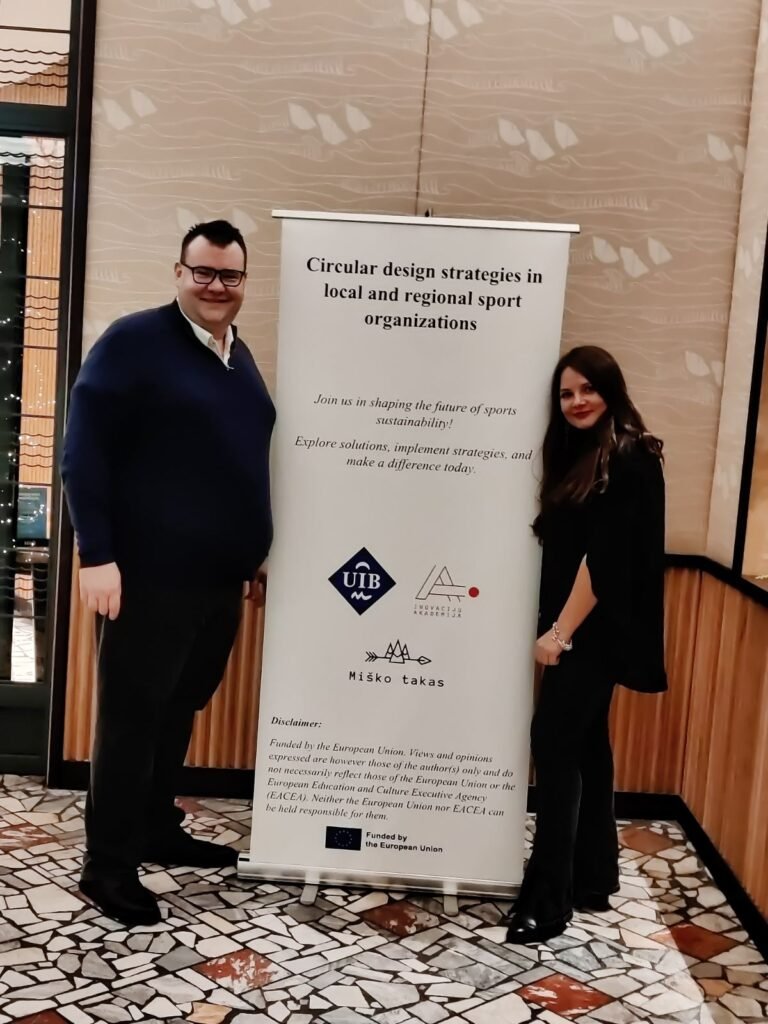
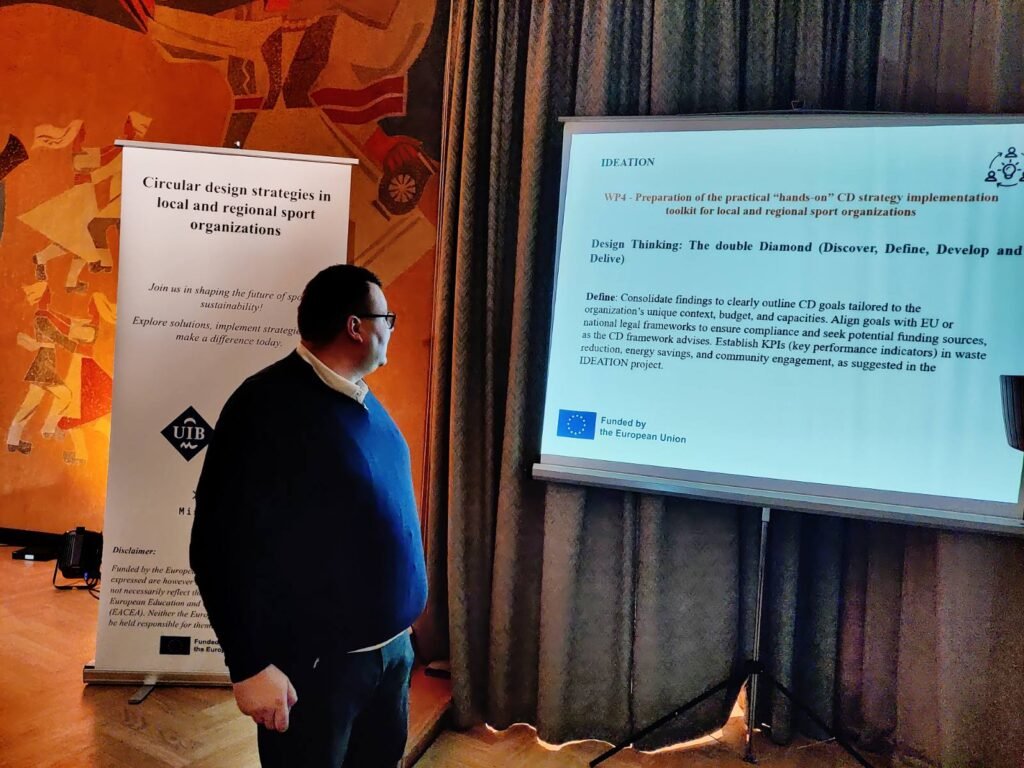
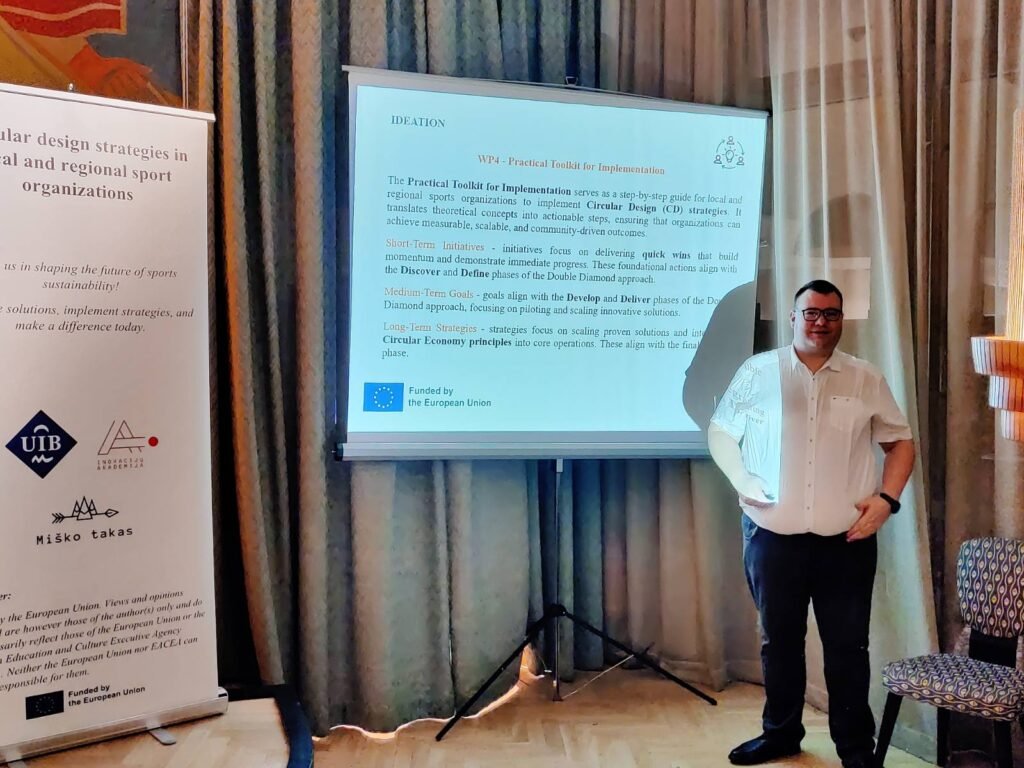
On December 18, 2024, the IDEATION Project held a workshop at the “Neringa Hotel” in Vilnius, Lithuania. This engaging event brought together stakeholders from local and regional sports organizations to explore practical applications of Circular Design (CD) strategies tailored for sports management. The workshop introduced the IDEATION Practical ‘Hands-On’ Circular Design Strategy Implementation Toolkit, specifically developed to empower sports organizations in adopting sustainable and regenerative practices.
The workshop began with a warm welcome and opening remarks by Mr. Tomas Petronis, Project Manager at Inovacijų Akademija. He emphasized the critical role of sustainability in reshaping the future of sports. The presentations that followed provided valuable insights into both the theoretical and practical aspects of Circular Design strategies. Participants gained a comprehensive understanding of the IDEATION project’s goals, which focus on integrating Circular Economy (CE) principles into local and regional sports organizations.
During the session on the Theoretical Framework for Circular Design Strategy Application, attendees were introduced to the foundational concepts of Circular Design. This presentation set the stage for the subsequent unveiling of the Hands-On Toolkit, a practical resource designed to guide sports organizations in auditing their sustainability practices, identifying challenges, and implementing scalable solutions. The toolkit aims to provide organizations with actionable steps to integrate CE principles effectively.
The interactive discussions held during the workshop allowed participants to explore the practical application of the framework and toolkit. Key topics included performing sustainability audits, setting measurable goals such as waste reduction and energy efficiency, and developing prototypes for innovative solutions. These discussions highlighted the importance of tailoring strategies to the unique needs of each organization while aligning with broader EU and national sustainability goals.
Real-world examples and case studies were shared to illustrate how Circular Economy principles could be successfully applied across various levels of sports organizations. Examples from grassroots to regional clubs showcased the tangible benefits of adopting these practices, including environmental stewardship, cost savings, and enhanced community engagement.
As the IDEATION project progresses, its focus remains on creating a sustainable sports sector by providing tools and guidance that are both practical and impactful. Future workshops and updates will continue to refine the toolkit, offer additional resources, and share success stories from organizations that have embraced Circular Design strategies.
Stay connected with the IDEATION project to learn more about our efforts in transforming sports through sustainability!
Disclaimer:
Funded by the European Union. Views and opinions expressed are however those of the author(s) only and do not necessarily reflect those of the European Union or the European Education and Culture Executive Agency (EACEA). Neither the European Union nor EACEA can be held responsible for them.