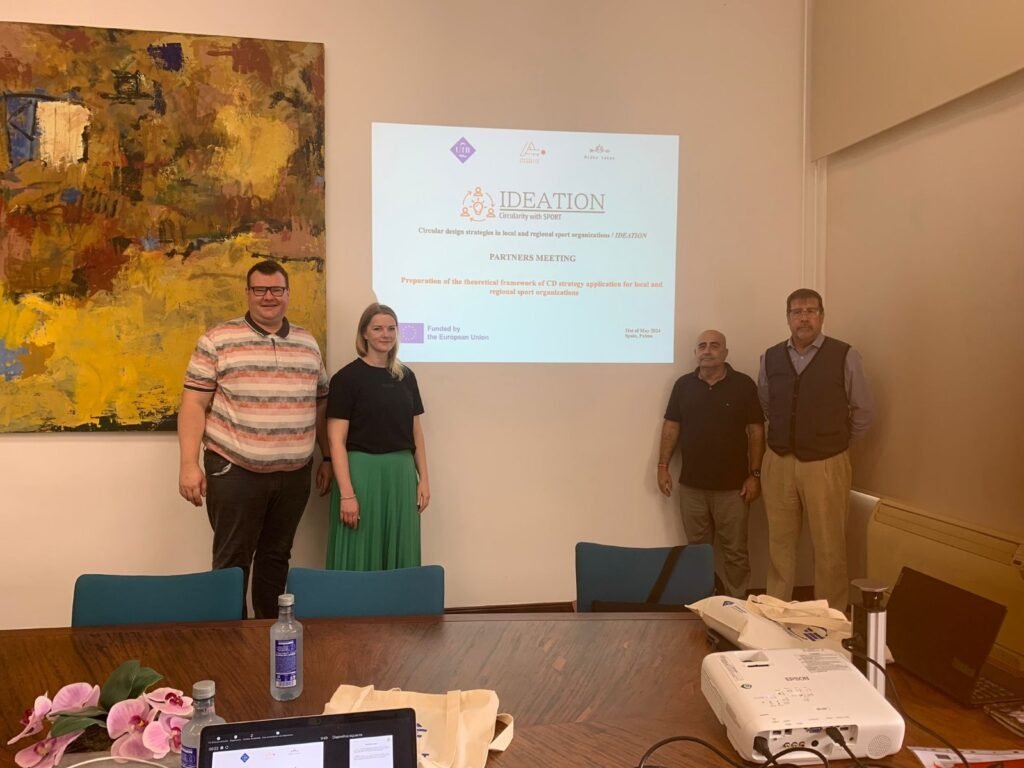
On May 31, 2024, the IDEATION project partners convened in beautiful Mallorca, Spain, for an engaging and productive meeting hosted by the University of the Balearic Islands (UIB).
The day began with a warm welcome from Dr. Adrià Muntaner Mas, Vice Rector of Campus and Sustainability at UIB, setting an inspiring tone for the discussions on sustainability and innovation in sports.
Key Highlights of the Meeting:
1) Context Analysis Review: Led by Professor Alejandro Garcia Mas from UIB, partners summarized the comprehensive context analysis conducted as part of the project. The discussion included presentations of SWOT analysis results and key findings from interviews conducted with stakeholders in local and regional sports organizations.
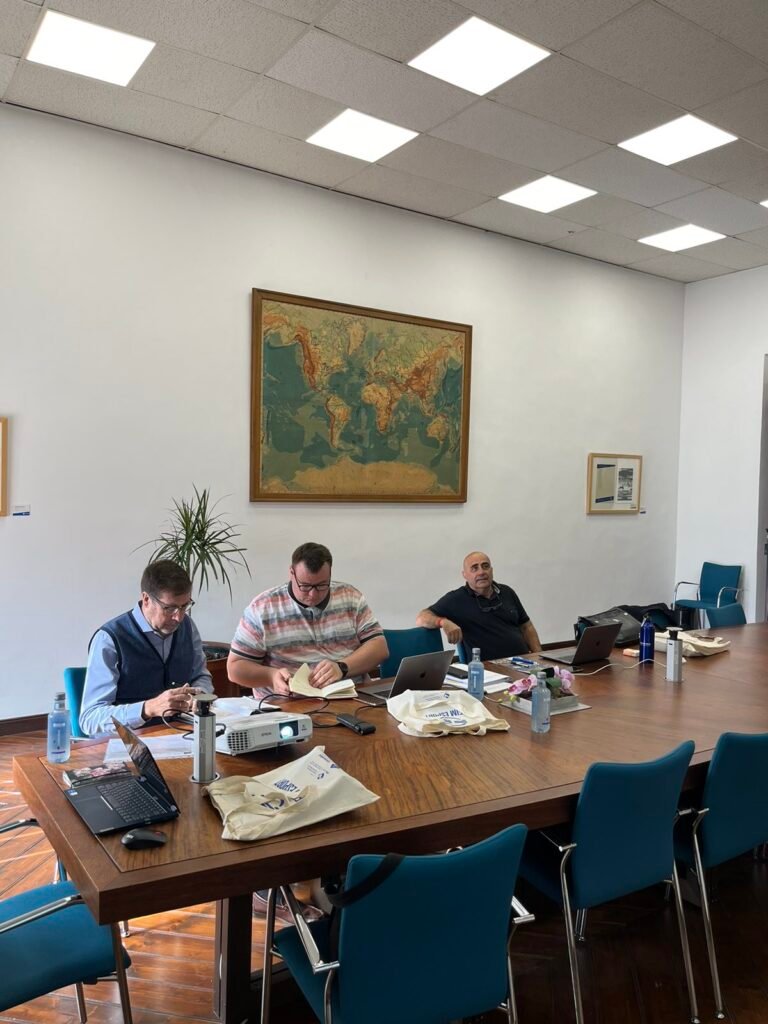
2) Workshop on Circular Design Strategy Framework: A dynamic workshop was held to further develop the Theoretical Framework for Circular Design (CD) Strategy Application. Partners collaborated on structuring the framework document, ensuring it would address the needs and challenges of local and regional sports organizations effectively.
3) Inclusion of Real-Life Examples: To make the framework more actionable, partners decided to integrate real-life case studies from existing sports clubs. These examples will showcase practical implementations of the framework’s recommendations, highlighting their impact on sustainability and inclusivity in sports.
This meeting marks a significant step forward in the IDEATION project’s mission to foster innovation and sustainability within the sports sector. The collective effort of the project partners continues to lay a solid foundation for driving meaningful change.
Stay tuned for updates on the finalized framework and upcoming activities as we work together to promote sustainable and inclusive practices in sports!
Disclaimer:
Funded by the European Union. Views and opinions expressed are however those of the author(s) only and do not necessarily reflect those of the European Union or the European Education and Culture Executive Agency (EACEA). Neither the European Union nor EACEA can be held responsible for them.